
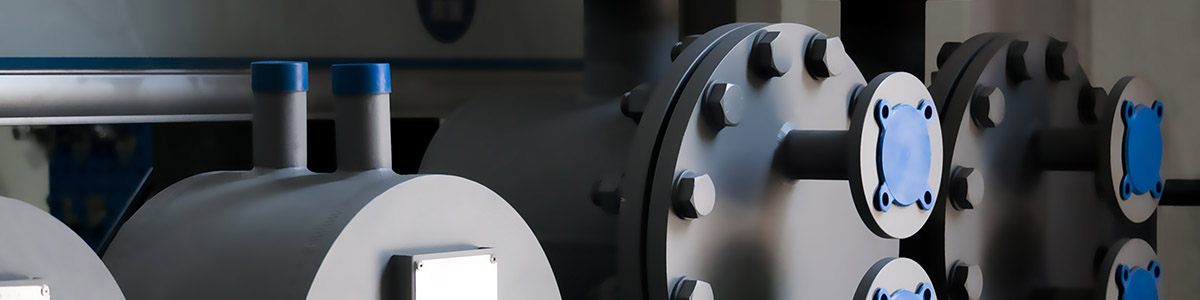
Marine and shipbuilding applications impose some of the most demanding operating conditions on heat exchangers, particularly when exposed to high-chloride seawater environments, variable loads, and continuous operation requirements.
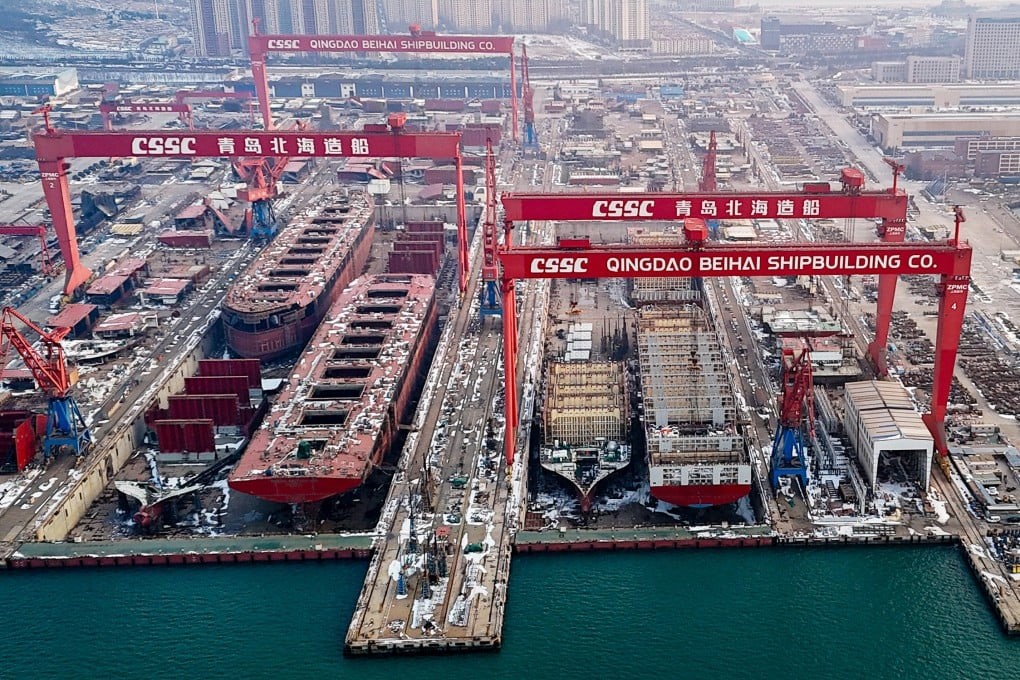
For this project, an all-titanium plate & shell heat exchanger was supplied to China Shipbuilding Corporation Limited for seawater and mixed-gas condensation duty. The exchanger is designed to operate reliably under corrosive marine conditions, where conventional stainless steel solutions face significant risks of pitting, crevice corrosion, and accelerated degradation.
The use of fully welded titanium plates provides exceptional resistance to chloride-induced corrosion and biofouling, ensuring long-term material integrity even in untreated or partially treated seawater. The gasket-free, fully welded construction eliminates leakage paths and minimizes maintenance demands—critical advantages for shipboard systems and offshore installations where accessibility and downtime are strictly limited.
From a thermal performance standpoint, the plate & shell configuration delivers high condensation efficiency and stable heat transfer performance across a wide range of operating conditions. The chevron-pattern plate geometry promotes strong turbulence on both the seawater and gas sides, enhancing condensation heat transfer while maintaining compact equipment dimensions compared to traditional shell-and-tube condensers.
The compact footprint and reduced weight of the plate & shell exchanger offer clear benefits for marine system integration, where space optimization, structural loading, and installation flexibility are essential design considerations. As a result, the titanium plate & shell heat exchanger provides a robust, corrosion-resistant, and lifecycle-optimized solution for seawater condensation in shipbuilding and marine energy applications.