Cylindrical Pressure Shell
The cylindrical shell provides mechanical containment around the welded plate pack for demanding pressure duties.

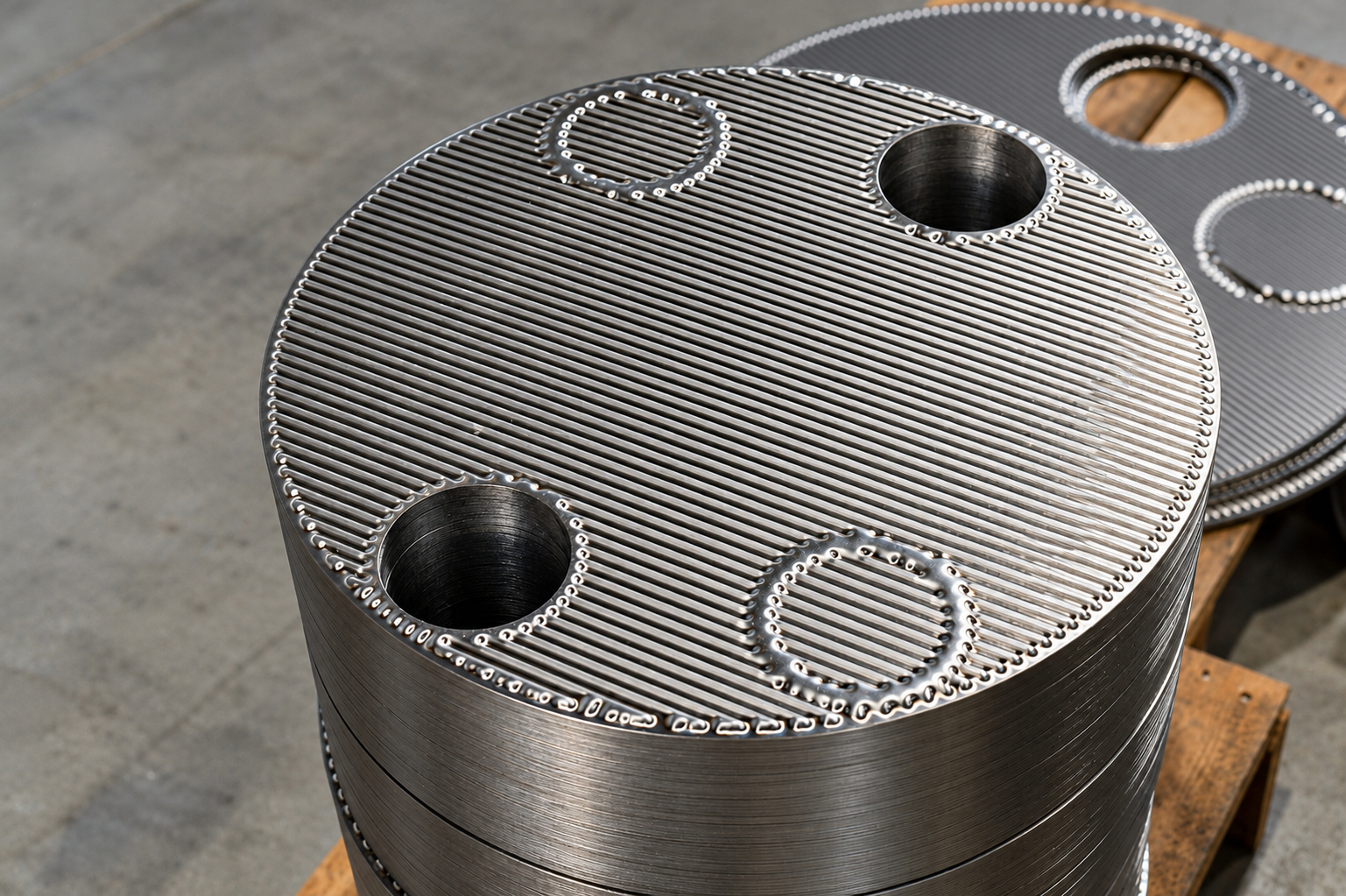
A fully welded circular plate pack. A strong pressure shell. Engineered around your thermal duty.
A fully welded circular plate pack sits inside a cylindrical pressure shell. Separate fluid circuits exchange heat across corrugated plates, with counter-current flow where the selected arrangement allows. Interplate channels are gasket-free; cover sealing depends on the shell configuration. Choose the thermal duty first; the BPS platform and construction follow the heat-transfer surface, hydraulic limits and installation requirements.
Send Your Duty for Selection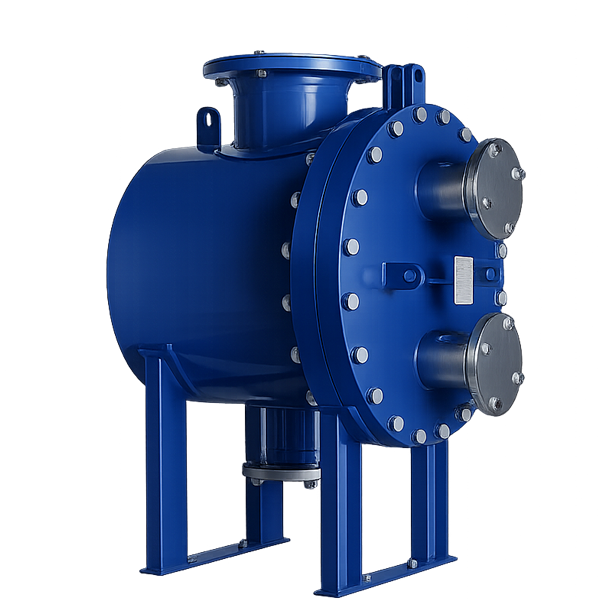
The cylindrical shell provides mechanical containment around the welded plate pack for demanding pressure duties.
Welded heat-transfer channels eliminate interplate gaskets. Shell-cover sealing depends on the selected construction.
Circular plates provide a high heat-transfer area relative to equipment volume.
The corrugated plate pattern promotes turbulence and heat transfer within a compact plate pack.
Pass arrangements can be selected to balance velocity, temperature approach and allowable pressure drop.
Existing JINCHEN technical material lists stainless steels, including 904L, titanium and nickel alloys. Review the materials section and confirm the specific grade and manufacturing availability during selection.
Low fluid hold-up and effective heat transfer can support rapid response during start-up and process changes.
Welded plate-pack construction is suitable for repeated temperature changes; the actual cycle profile is reviewed during engineering selection.
Suitable for demanding process, refrigeration, condensation and evaporation duties, depending on model, materials and design conditions.
High surface-area density can reduce equipment size compared with many conventional exchanger designs, subject to the selected duty.
A small fluid inventory is useful where refrigerant charge, process inventory or response time matters.
Openable configurations can provide access for inspection and mechanical cleaning. Fully welded shells require a compatible cleaning strategy, such as suitable cleaning-in-place or backflushing.
A closed construction where the duty and cleaning strategy allow it.
A removable cover provides access to the pack for the agreed maintenance strategy.
Pass arrangement follows flow rate, velocity, temperature approach and pressure-drop limits.
Orientation and nozzle allocation follow phase behaviour, drainage and installation space.
The available construction is confirmed during engineering selection. Review configuration guidance
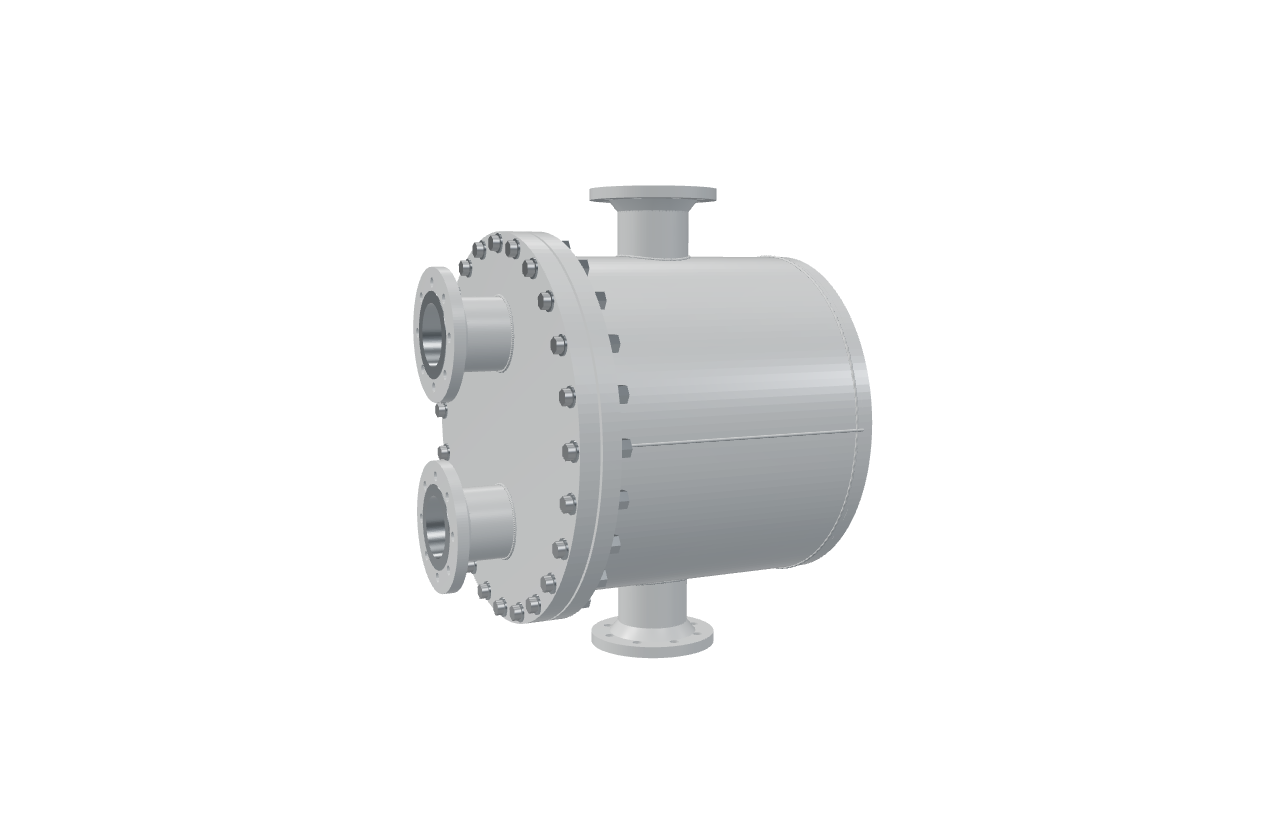
Water, glycol, oils and compatible process solutions. Review viscosity, fouling and pressure drop.
Review the application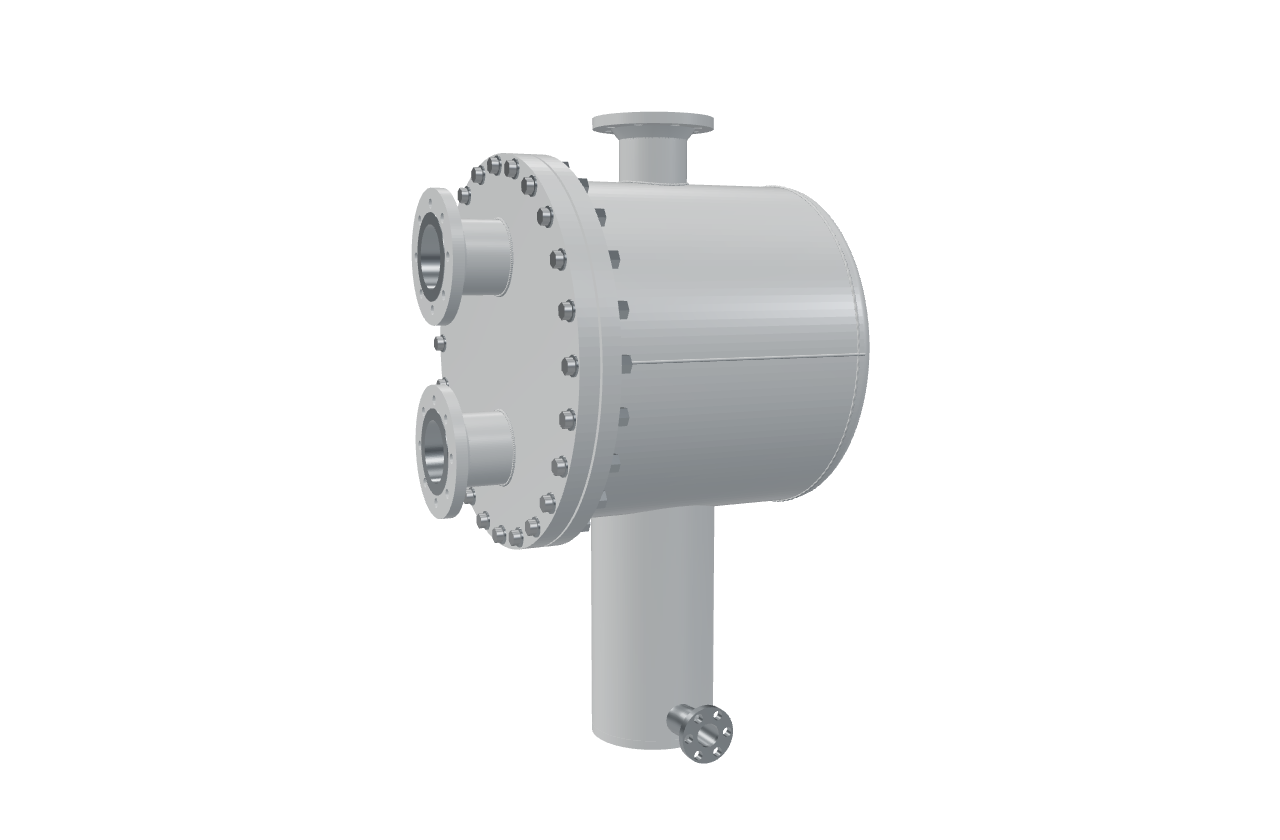
Steam, refrigerants and process vapours. Review vapour volume, drainage and cooling conditions.
Review the application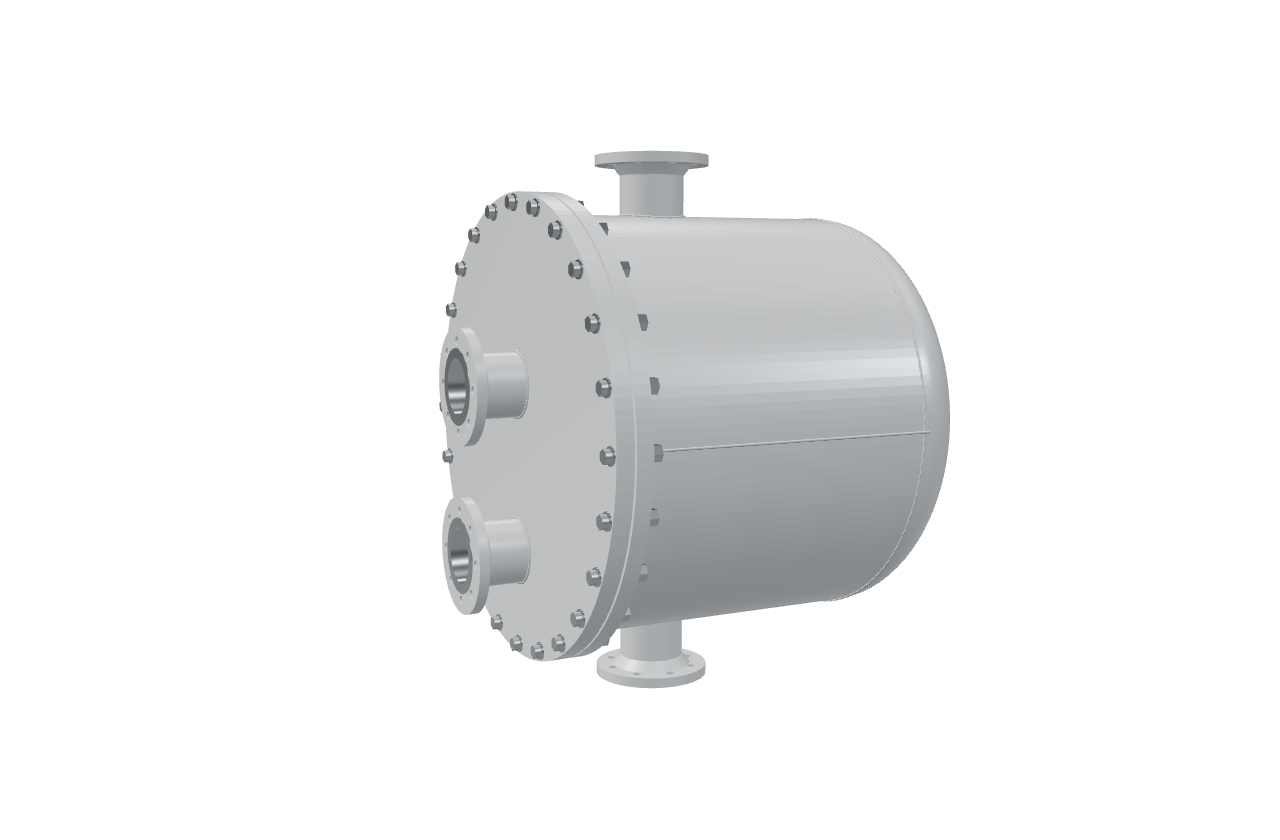
Flooded refrigeration and process boiling. Review liquid inventory, feed and vapour separation.
Review the application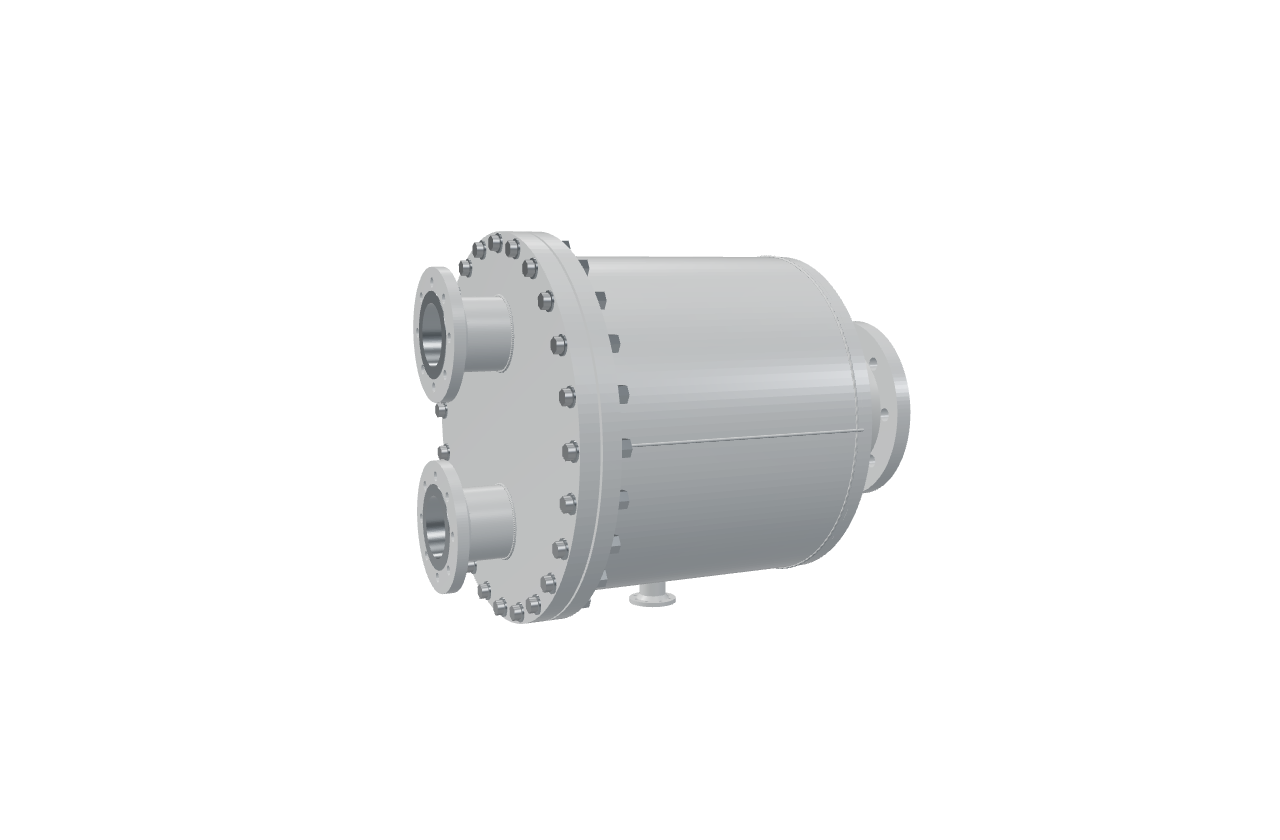
Recover energy from process streams. Define both streams, available temperatures and allowable pressure drop.
Review the applicationPlate side: DN15–DN350. Shell side: model-dependent ranges from DN15 to DN1200.
Pressure, temperature, heat-transfer area and inspection requirements are confirmed for the selected model, materials and duty. Catalogue maximum values must not be combined as an operating point.
Define the required design code, testing, inspection and documentation at enquiry. Availability is confirmed against the order requirements.
304L · 316L · 904L · 254 SMO · Duplex · Titanium · Nickel alloys
Carbon steel, stainless steels and corrosion-resistant alloys, selected for the project.
These options are listed in the existing JINCHEN technical material. Confirm grade and availability. Selection considers fluid chemistry, concentration, chlorides, temperature and cleaning method.
Review the published connections, then open a platform for its catalogue dimensions and selection requirements. A connection match is a starting point, not a completed thermal selection.
Connection diameter alone does not determine a suitable model. Send the hot and cold streams so thermal and mechanical selection can be reviewed together.
Send Operating ConditionsLearn how plate geometry, distribution and mechanical design shape performance.
Provide both fluids, flow rates, inlet and outlet temperatures, operating and design pressures, allowable pressure drop and material requirements. For an existing installation, include the nameplate and arrangement drawing.